Championing the CS Voices of APAC
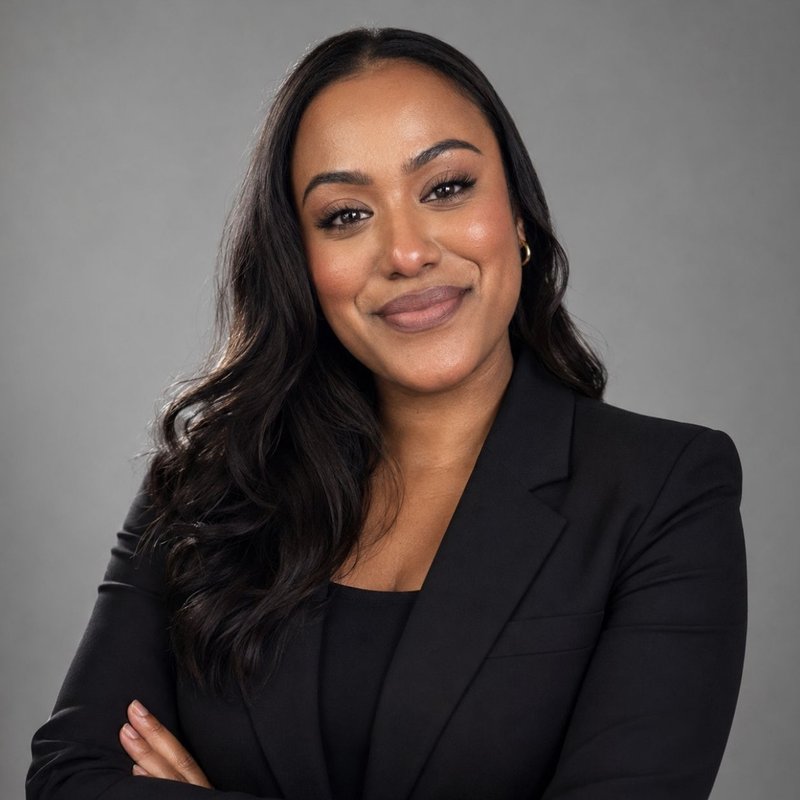
Sylvia Seakar
Customer Success Director, SeeMeSOL · Singapore
Sylvia leads a team of six across Singapore, the Philippines and Indonesia. She describes her work as translating between cultures, markets and what people actually mean.
“So please, don’t hand us one playbook and a translation budget. When you’re running CS here, the first thing to understand is that there is no ‘here’. There are many.”
Sylvia Seakar
How did you end up in Customer Success?
My background has always been in customer experience. Setting up customer operations, designing workflows, figuring out how things should run behind the scenes.
Just before CS, I was helping set up a digital brand for one of the major telcos here, specifically its digital support. This was before AI could hold a proper conversation. So “building the bot” meant predicting every possible way a customer might ask something, then manually writing the response for each one. Very clever on paper. Very manual in practice.
Somewhere in all of that, I noticed I was always doing a lot more than the role required, and I realised that wasn’t where I wanted to be. I wanted to be somewhere the end goal actually mattered, and not just the ticket in front of me. Even when designing support processes, I kept gravitating towards the proactive side, fixing things before customers had to ask.
I’d also always wanted to bring the commercial side into my work, alongside the service side. So I went looking for roles that combined all of it, and found client success, as it was often called then. And boy, was I glad. It stopped feeling like a job a long time ago. It’s more like a vocation to me.
What brought you to Singapore and to leading across Southeast Asia?
I didn’t so much come to Singapore as get born into it. I’m a multi-generational Singaporean, so this has always been home.
What that’s given me is a front-row seat to how much passes through here. Singapore is a hub for so many industries, and for business in general. A lot of companies set up their Asia headquarters here, so working in tech naturally meant working for regional HQs. The region was always part of the job, even when it wasn’t in my title.
The leadership part happened more gradually. Time and time again, in different roles, I found myself stepping into leading, and people kept telling me it came naturally. So I leaned into it. I grew, the roles grew with me, and eventually that turned into leading CS across Southeast Asia.
Which markets does your team cover and how different are they from each other in practice?
My background is across APAC, and right now my focus is Southeast Asia: Singapore, the Philippines and Indonesia. Three neighbours on a map. Very different in practice.
What surprised me most is how much the calendar runs the business. In the Philippines, September means BER months. Christmas prep starts, everyone’s in a jolly mood, people start taking breaks, and suddenly your Q4 plan is competing with the office party. I did not expect it to kick in that early.
Singapore is pretty neutral most of the year, until Lunar New Year. Especially with Singapore-headquartered companies, there are decisions that just won’t get made around that period. Numbers matter too. Four is generally seen as unlucky, and it’s something most of us grow up adapting to, whatever our background. So much so that it’s quietly made its way into our pricing. You won’t find a four, but you’ll often find an eight.
Indonesia is a different rhythm again. It’s not an email market. If it matters, it’s on WhatsApp.
Language matters too. In Singapore, English is our first language. In the Philippines, it’s a common working language. In Indonesia, it’s often a second or third language, so how we write, present and run sessions has to adapt. Even the small stuff. That Christmas webinar with party hats that works in Manila becomes a “year-end celebration” across the region.
But for all the differences, there’s a lot we share. We’re all Asian, and a lot of how we build trust, show respect and handle relationships feels familiar across all three. That mix of different and familiar is what makes leading a regionally distributed team so much fun.
What does a customer relationship look like here that a CS leader outside the region would misread?
In this part of the world, we often start a conversation with “have you eaten?” It translates differently across our languages, but it means the same thing: how are you doing? A German colleague of mine found that very strange. Why does everyone want to know about my lunch?
That’s a small example of how easily things get misread.
Hierarchy matters here. In escalations, in decisions, even internally. A “flat” organisation in this region doesn’t look like a flat organisation in the West. So a big part of managing an account is learning to navigate the organisation itself: who you speak to, who actually decides, and when. There are even dates when decisions simply won’t be made.
We’re also quite collectivistic. Everyone wants to be nice, and nobody wants to be the bad cop. So “everything’s fine” doesn’t always mean everything’s fine. Sometimes it’s language, sometimes it’s not wanting to be the one who says it. And when that message travels from someone on the ground to a leader outside the region, the gap gets wider.
That’s why the middle manager matters so much. They’re the translator.
And a lot of the relationship doesn’t happen over email. It’s WhatsApp, Viber, WeChat. So one of the most important things I’ve done in building a team here is making sure all of that still lands in one place in the CRM. Otherwise, half your customer history lives in someone’s phone.
What did the CS function look like when you took it on?
Very relationship driven. Which is great, until you need to scale. It was high touch and very one-on-one.
In this region, CS is often a high-growth function, so while we were building it, we also had to think about scaling it almost straight away.
CS was also still fairly new here. It’s not like engineering or sales, where people have been doing the job for decades. So most of the team came from other backgrounds, not from CS. And honestly, so was I. I don’t have 20 or 30 years of CS behind me. I was learning CS myself, while also learning how to translate it for this region, and building a team at the same time.
Then COVID arrived. Right as CS was becoming more prominent, we had to go remote and distributed almost overnight. Less in person, more virtual, but the relationships still had to feel personal. We had to adopt technology fast and stay agile, because there wasn’t really a manual for doing all of this at once.
What was the first thing you changed as a leader and why that one?
Culture. Which is a big word, I know. What I really mean is: how do I keep a team motivated when we’re distributed, in a part of the world where remote work was almost foreign to most of us?
Here, so much of understanding someone comes from implicit cues. The pause, the expression, what they don’t say. That’s hard enough in person. Virtually, it’s really tough to pick up on.
So the first change was cameras on.
The second was how we communicated. I pushed the team to be proactive, almost over-communicators. That did not come naturally. It’s just not how most of us are wired, and like any change, it came with resistance.
We also became very intentional about time together. Regular check-ins, but also social check-ins and activities, because in a remote team, those moments don’t happen by accident.
And all of this was happening alongside high stress and high volume. So we weren’t changing culture in a calm, quiet moment. We were doing it while everything else was moving too.
Today, the team isn’t just proactive. They’re proactive problem solvers. They don’t just flag things, they come with a way forward. And that’s made a real difference to how we work together.
Tell me about a time a global or HQ playbook did not work here and what you did instead.
The playbook gives you structure. The relationship decides the outcome.
Renewals.
The standard playbook says: check the contract terms, reach out at set points before renewal, show the ROI, close it out. Nice and structured.
In reality, the renewal conversation here starts on day one of the contract. Clients see it as a partnership. Almost like a marriage. You don’t propose renewal three months before the anniversary and hope for the best. Decisions also tend to come from the top, not from the person you speak to every week. And some clients expected white-glove service across the board, even when that wasn’t what they’d signed up for. So by the time renewal came around, we were having a very different conversation from the one the playbook prepared us for.
So I kept the core of it. Contract terms and timelines still matter. But the timelines became dynamic, driven by health scoring. And the health score itself had to include relational trust, not just usage. That meant reading sentiment, pulling in conversations from WhatsApp and other channels, and setting expectations very clearly upfront.
And sometimes it meant accepting that the renewal isn’t really a process. It’s rapport, built over the whole contract. The playbook gives you structure. The relationship decides the outcome.
What is hard about hiring and developing CS talent in your market and how have you handled it?
CS here is a high-growth function, and still quite new. That combination means you rarely get experienced CSMs walking through the door, let alone ones who’ve worked somewhere moving this fast. Most of the time, you’re hiring for potential and training from scratch.
That changed how I hire. The usual CSM interview questions don’t really work when most candidates have never had the title. So I look for two things: curiosity and agility.
Curiosity shows up in side projects, in what else they’re interested in, how they learn and what makes them want to. Agility is how they think on their feet, especially when something happens that nobody’s prepared them for.
Those I can’t really teach. The CS skills, I can.
Once they’re in, the real work starts. So much of CS is soft skills, and those take time to build. But in a high-growth market, you don’t get the luxury of time. People learn while doing, in parallel with everything else. And it all has to fit the culture too, because what “good CS” looks like here isn’t always what the textbook says.
What’s worked for me:
- Getting clear on which skills to hire for and which to train in
- Making one-on-ones structured, so they’re real development conversations, not just status updates
- Keeping the social side alive. Once a month, we intentionally make time just to be together as a team
What have you built in your current organization that you would keep and what would you throw out if you started again?
Keep: one home for every customer conversation. So much of our communication happens on messaging apps like WhatsApp, Viber and WeChat, and if it doesn’t land in the CRM, your customer history lives in someone’s phone. When that person goes on leave, so does the account knowledge.
I’d also keep the culture we’ve built. A team that over-communicates, flags things early and comes with solutions. That took real effort, and it’s what holds everything else together.
Throw out: white-glove for everyone. In the early days, every client got the same high-touch treatment, because that’s how relationships are built here. It felt right. It just doesn’t scale. If I started again, I’d set clear service levels from day one, so the relationship stays personal without every account needing the same amount of us.
What do you wish leaders outside APAC understood about running CS here?
Two words: market uniformity. Or rather, the lack of it.
APAC isn’t one market. It’s hyper-fragmented, and I can’t stress that enough. North America or Western Europe can often get away with a single strategy. Here, every market is genuinely distinct. Different currencies, different time zones, different technology, different regulations. Even how mandates work changes from one country to the next.
So please, don’t hand us one playbook and a translation budget.
When you’re running CS here, the first thing to understand is that there is no “here”. There are many.
Anything else you want to say that the questions did not get to
A few things I genuinely believe.
CS shouldn’t be an afterthought. Ideally, I think CS should own the entire post-sales organisation, and this region would really benefit from that. I also get why it’s hard. In Asia, CS is often part of a regional expansion of a much larger company, so the structure is usually decided somewhere else. Not impossible, just challenging.
CS in this region also needs a louder voice. A lot of us are proud of the work we do, we just don’t know how to say it, where to share it, or we assume it’s not necessary. It is.
To CS leaders here: don’t be afraid to let your people shine. If someone you manage ends up doing better than you, that’s not a threat. That’s the point.
And to individual contributors: ask questions, build relationships, step out and network. And if the frameworks don’t quite fit your market, it’s not you. Adapt them. That’s the job.